Introduction: Plan the Order Before You Place It
How to Buying Packaged Drinking Water in Bulk ? Bulk packaged drinking water orders can help businesses plan stock for customers, staff, guests, and events. But a successful order requires more than choosing a brand and asking for a price. Buyers need to define the quantity, bottle sizes, timing, storage space, delivery location, and conditions that matter to their operation.
HIMRO serves as the brand focus of this guide for buyers considering packaged drinking water for retail or business use. Actual sizes, stock availability, delivery coverage, pricing, and order terms must be confirmed directly with the business. The purpose of this article is to help buyers prepare a clear enquiry and make a fair comparison between suppliers.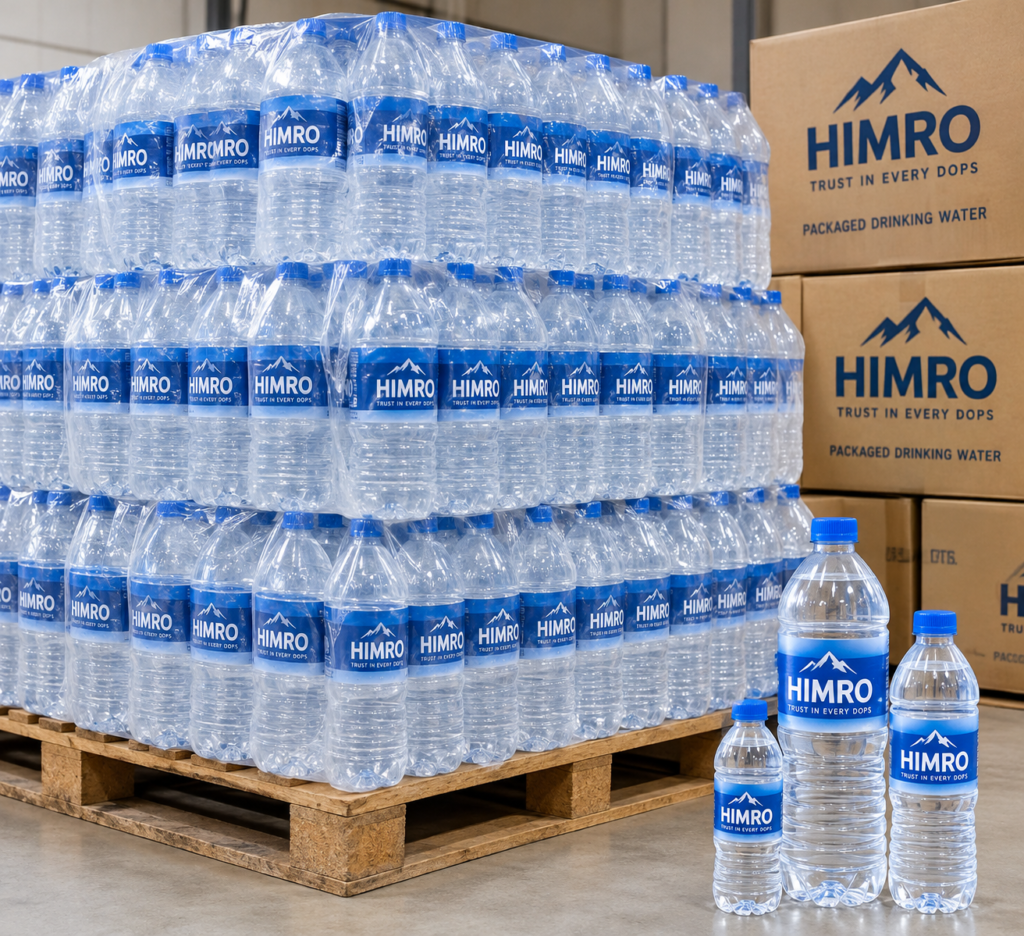
Who May Need Bulk Packaged Drinking Water?
Retailers and shop owners
Retailers may buy cases to maintain shelf availability and respond to customer demand. They should consider the size mix, case quantities, shelf capacity, stock turnover, and how much cash they want to commit to inventory. Ordering too much can tie up storage and working capital; ordering too little can create frequent replenishment work.
Offices and workplaces
Offices may need water for staff, visitors, meetings, training sessions, or other activities. The required quantity depends on the number of people, operating schedule, the way drinking water is provided, and the duration of any event. Buyers should avoid using a fixed estimate without considering their actual situation.
Restaurants, hotels, and caterers
Hospitality businesses may require packaged water for guests, takeaway orders, catered functions, or events. The right size and quantity depend on the service model and customer expectations. Buyers should also consider storage, staff handling, and how stock is monitored during busy periods.
Event organizers
Conferences, weddings, sports activities, community gatherings, and business events can require a planned stock of drinking water. Organizers should estimate attendance, event duration, access to drinking water, distribution points, and backup needs. They should also plan for waste collection and responsible disposal or recycling where available.
Distributors and wholesalers
Distributors need to understand case dimensions, transport requirements, storage capacity, customer demand, and replenishment arrangements. A quotation should make the unit, case quantity, total quantity, and delivery conditions clear
7 Steps How to Buying Packaged Drinking Water in Bulk ?
Step 1: Define the Purpose and Quantity
Start by identifying what the order is for. A retail order may be based on expected sales over a specific period. An office order may be based on the number of people and the way water is provided. An event order should consider attendance, duration, weather, other refreshments, and the venue’s arrangements.
Write down the approximate number of bottles required, the preferred sizes, and the delivery date. If you are uncertain about the final quantity, ask whether the supplier can quote different quantity options. Do not assume that a supplier can split a shipment or deliver additional cases at short notice; confirm this in advance
Step 2: Select the Right Bottle Sizes
Different settings may call for different bottle formats. Smaller bottles may be convenient for individual distribution, meetings, or catered events. Other sizes may suit retail demand, longer use, or particular service arrangements. The suitable choice depends on the product range actually available.
When discussing HIMRO, state the size or sizes you want and ask the business to confirm current availability. If you are open to alternatives, say so in the enquiry. A supplier can only quote accurately when it knows which product format and quantity you are considering.
Step 3: Request a Clear, Comparable Quotation
A useful quotation should state: Product or brand name. Bottle volume and pack format. Number of bottles per case. Number of cases and total bottles. Unit or case price. Applicable taxes and delivery charges, if any. Delivery location and estimated timing. Payment terms. Any minimum order quantity or other conditions. How damaged or incorrect deliveries are handled.
Use the same requirements when requesting quotes from different suppliers. Otherwise, one quote might cover a different bottle size, quantity, or delivery arrangement and may not be directly comparable. Ask whether the quoted price is valid for a particular period. Prices and availability can change, so an old quotation should not be treated as a current offer.
Step 4: Evaluate the Supplier, Not Just the Price
Price is important, but it is not the only factor. Buyers should consider whether the supplier communicates clearly, provides the requested product details, explains delivery terms, and has a practical process for resolving order issues. Businesses with repeat requirements may also value consistent documentation and predictable communication.
Before committing, confirm the product label and the information relevant to your business. Where you require regulatory documents or other compliance evidence, ask for the applicable documentation and verify it through appropriate channels. Never rely on unsupported claims or assume a particular certification exists without checking.
For HIMRO, buyers can prepare a concise enquiry that includes their intended use, required quantity, sizes, delivery location, and date. This allows the business to confirm whether the request can be met and to provide relevant terms.
Step 5: Plan Delivery and Receiving
Delivery planning is particularly important for large orders. Confirm who will receive the shipment, the hours when the site can accept it, vehicle access, unloading arrangements, and the space needed to hold stock. A delivery that arrives when no one can receive it may create delays or additional handling.
When the order arrives, check the number of cases against the delivery documentation. Look for obvious carton damage, leakage, or compromised packaging. If there is a discrepancy, record it and contact the supplier promptly according to the agreed process. Keep the relevant invoice or order confirmation available.
Do not sell or distribute products with damaged or compromised packaging as if they were intact. Follow the supplier’s instructions and applicable procedures for reporting the issue.
Step 6: Store Stock Properly
Before ordering, make sure there is enough clean, suitable storage space. Keep cartons away from chemicals and other potential contaminants, and follow the label’s storage guidance. Avoid unsuitable heat and direct sunlight where instructed. Store stock so staff can access it safely without crushing cartons or blocking exits.
Retailers should maintain a basic inventory process and monitor product dates. Offices and event venues should keep unopened stock in a designated location until it is needed. Distributors may need to account for case dimensions, stacking, and transport conditions.
Storage planning is one reason to avoid ordering an arbitrary large quantity. The right order is the one that meets demand while remaining manageable for the buyer’s facilities and budget.
Step 7: Build a Reordering Process
For recurring demand, record how much stock is received, how quickly it is used or sold, and when replenishment is needed. Retailers can use sales records to identify demand patterns. Offices can review usage over several weeks. Event organizers can document the difference between estimated and actual requirements to improve future planning.
Conclusion:-
A Clear Plan Makes Bulk Buying Easier
Buying packaged drinking water in bulk is easier when the order is planned around real requirements. Estimate quantity, select suitable sizes, request comparable quotes, verify product details, coordinate delivery, and prepare storage before the shipment arrives. For repeat orders, use sales or consumption records to improve future estimates.
HIMRO is the brand to contact if you would like to enquire about packaged drinking water for retail or business use. Confirm the sizes currently available, case quantities, prices, delivery options, and terms directly before making a commitment.
Call to action:-
Need packaged drinking water for your shop, office, restaurant, distribution business, or event? Contact HIMRO with your requirements and request a quotation.