Introduction: Find a Supplier That Fits Your Requirements
For shops, offices, restaurants, caterers, and event organizers, choosing a packaged drinking water supplier involves more than finding a name online. Buyers need to understand product sizes, order quantities, pricing, delivery arrangements, packaging condition, and the information provided with the product. Clear answers help a business plan purchases and avoid last-minute surprises.
If you are searching for a packaged drinking water supplier in Indore, use this guide as a checklist. HIMRO is the brand featured in this article, but current service areas, availability, prices, and delivery terms should be confirmed directly. This article does not assume that a particular location is covered or that any specific product size is always in stock.
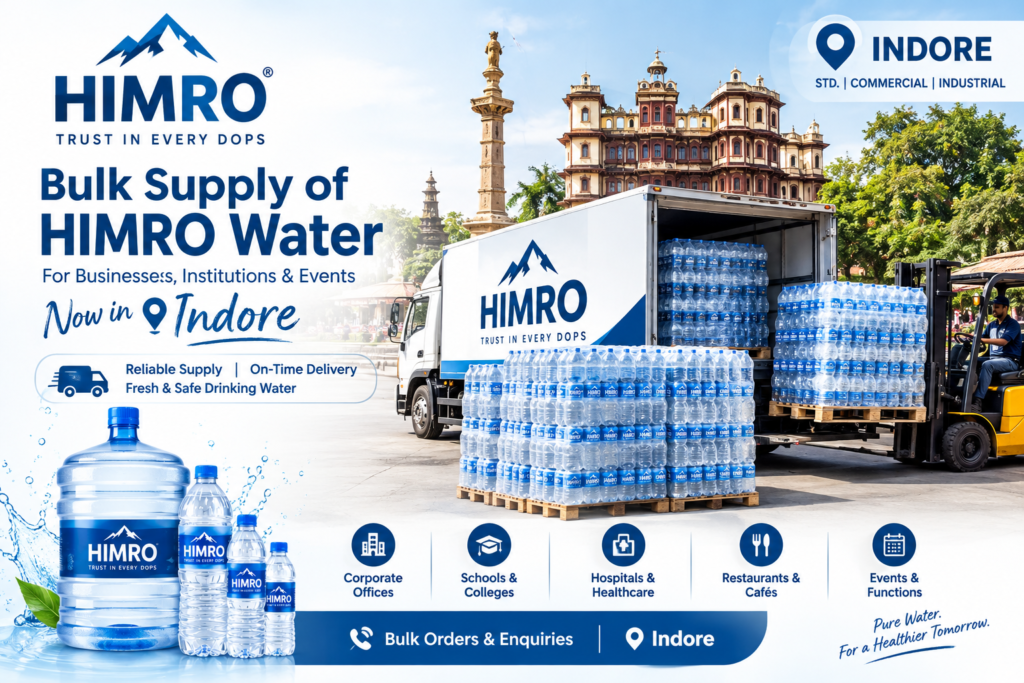
Why Local Supplier Research Matters?
A local search often reflects an immediate need. A retailer may be looking to replenish stock; an office may be preparing for a meeting; a restaurant may need packaged water for service; or an event planner may be arranging refreshments. In each case, the buyer needs a supplier who can clarify the order requirements and confirm whether the requested arrangement is possible.
Local relevance should not replace verification. A website or search listing may help identify a business, but the buyer should still confirm its contact details, available products, delivery coverage, and commercial terms. Avoid assuming that a supplier delivers to a particular neighborhood merely because it appears in search results for the city.
Step 1: Identify Your Business Requirement
Before contacting suppliers, write down what you need. A retailer may require cases for resale. An office may want bottles for staff, guests, or meetings. A restaurant may need a format that suits its service style. An event organizer may need a one-time order with a specific delivery date.
Clarify: Intended use. Preferred bottle size or sizes. Approximate number of bottles or cases. Required delivery location. Desired delivery date and receiving hours. Whether you need a quotation or invoice. Any product information or documentation your business requires.
This helps suppliers respond to the actual request instead of guessing what the buyer means by “bulk” or “regular supply.”
Step 2: Check Product Details and Labelling
A supplier should be able to help you identify the product being quoted. Confirm the brand, bottle volume, pack format, and the number of bottles per case. Review the label for the details required under applicable rules, including relevant manufacturer or packer information and batch or date information where required.
If your business requires specific regulatory documentation, ask for it and verify it through the appropriate channel. Do not rely on a verbal claim alone when formal evidence is needed. Do not assume a supplier holds a particular license or certification unless it has been confirmed.
For HIMRO enquiries, ask for details about the products currently available and any information you need to evaluate them for your business.
Step 3: Compare Quotes Fairly
When comparing suppliers, make sure the quotes refer to the same product size and quantity. A price per bottle cannot be compared directly with a price per case unless you know how many bottles the case contains. Likewise, delivery fees, taxes, minimum order quantities, and payment terms can change the total cost.
Ask each supplier to clarify: Product name and size. Bottles per case and number of cases. Total bottle quantity. Unit or case price. Applicable additional charges. Delivery availability and timing. Payment terms. Process for damaged or incorrect orders.
Keep written quotations so you can compare them later. If a quote is unclear, ask for clarification before approving the purchase.
Step 4: Evaluate Communication and Order Handling
Good communication matters in repeat purchasing. Does the supplier understand your request? Are product and pricing details stated clearly? Can the supplier explain what happens if a delivery is delayed or the received quantity differs from the order? These questions help you understand how the business handles the buying process.
For a recurring requirement, ask how to place a repeat order and what information should be included. Do not assume that same-day delivery, emergency restocking, or a fixed delivery schedule is available unless the supplier confirms it.
HIMRO buyers can make the conversation more productive by sharing the exact sizes, quantities, location, and date needed. The business can then confirm the available options and relevant terms.
Step 5: Confirm Delivery Coverage Before Ordering
Indore includes a variety of commercial and residential areas, but not every supplier necessarily serves every location. Provide the complete delivery address or area and ask whether the supplier can deliver there. Confirm the expected date, delivery window if offered, vehicle access, unloading arrangements, and who will receive the shipment.
For an event or business opening, allow enough time for confirmation and receiving. A supplier’s general presence in a city does not guarantee a particular delivery time or service area. Get important arrangements confirmed in writing.
If collection is being considered instead of delivery, ask whether that option is available and what collection arrangements apply. Do not assume that a warehouse or pickup point is open to customers.
Step 6: Plan Storage at Your Business
A supplier decision should take your storage capacity into account. Measure the available space and consider how many cases can be stored without blocking walkways or creating unsafe stacking. Keep packaged water in a clean, suitable area and follow product storage instructions. Avoid storing it beside chemicals or materials that could contaminate the packaging environment.
Retailers should maintain a simple stock record and monitor product dates. Offices and event planners should designate a place for unopened cases. If the product arrives with damaged cartons, leaks, or compromised seals, separate the affected items and contact the supplier promptly.
Storage planning can also help you choose an appropriate order size. Buying more than you can store safely or use within a reasonable period may create unnecessary complications.
Step 7: Think About Repeat Orders
Businesses that use packaged drinking water regularly can benefit from a consistent ordering routine. Record how much stock is used or sold, when orders are placed, and how long replenishment takes once confirmed. Use those records to plan the next order instead of relying on memory.
A repeat-order record can include: Date and quantity of the previous order. Bottle sizes and case configuration. Supplier quotation and invoice. Actual delivery date. Any shortage or damage issue. Approximate stock remaining. Next expected requirement.
This information helps a buyer forecast demand and explain requirements clearly to a supplier. Demand may change with events, customer traffic, season, and operating hours, so review the record regularly.
Conclusion:- Choose a Supplier Through Clear Questions
Finding a suitable packaged drinking water supplier in Indore starts with a clear requirement and a fair comparison. Confirm the product, bottle size, case quantity, price, delivery coverage, documentation, and order-handling process. Plan storage before placing a large order and keep records if you expect to reorder.
If HIMRO is on your shortlist, contact the business directly to confirm the details relevant to your purchase. Clear information helps both the buyer and supplier understand the request and determine the next steps.
Leave a Reply